Brazil: Parents Swap Stoicism for Tears Over Tradition
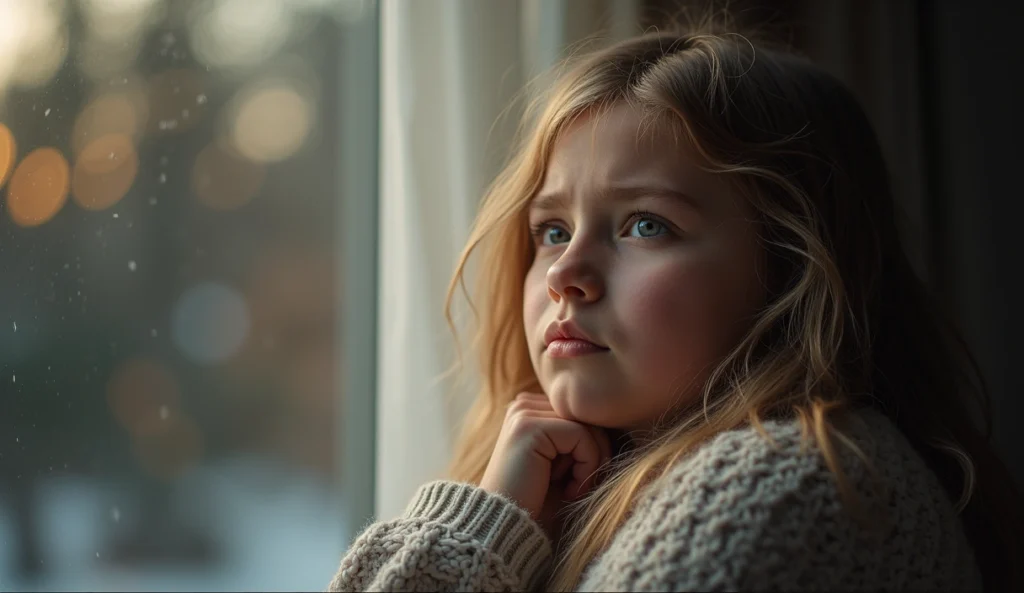
A mother’s decision to stop hiding her sadness from her children began on Christmas in 2021. Her oldest child was sixteen and her youngest was twelve.
The children had just opened their presents. It was meant to be a joyful morning. Instead, the mother turned away toward the foyer of the house, her back to her family, as she tried to hold back tears. Her own mother was in a psychiatric hospital again, her mental health in crisis once more. The grief and helplessness of the repeated situation finally overwhelmed her.
For years, she had tried to keep her pain out of sight. She thought she could hide it again that day, but she could not. Both children asked if she was okay. She whispered that she was fine even as tears streamed down her face.
Then something unexpected happened. Both children came toward her and wrapped her in a hug. There was no fear or confusion, just steady love. That moment began to change something for her. Her children were not overwhelmed by her sadness; they simply responded to it. An old belief that her pain was dangerous to her loved ones began to crack.
She had long tried not to become like her own mother, whose emotional chaos had been disruptive. She never wanted her children to feel burdened by her feelings as she had been. In trying to avoid the past, she guarded her emotional interior when she was sad, thinking she was protecting them.
What she did not understand then was that her children did not need protection from her humanity. They needed a connection to it. In late 2023, her younger child made an observation that showed her hiding was not working. “You’re the sad one,” he said, “and Dad is the mad one.” The truth stung, but she knew he was simply saying what he saw.
He was not wrong. Even after that Christmas, she had gone back to holding everything in. But her son had still been seeing her sadness for years through family struggles and quiet losses. He often asked if she was okay, sensing something was there. She realized there was no point in hiding her inner world if her children could already feel it without words.
Children are intuitive. They pick up on tension, sadness, and distance long before anything is explained. When adults pretend everything is fine, children still feel that something is off. Without context, they may assume a parent’s sadness is about them or something they need to fix.
The mother began to understand that by giving her children enough truth without overburdening them, they were better able to understand her feelings were not their fault. They could see that her feelings were real, human, and separate from them.
She also saw more clearly that her children had always seen her as strong and capable, the one who handled things. By not letting them see what she perceived as weakness, she had never given them the chance to know that her feelings mattered, too.
As she began sharing more of her interior world in age-appropriate ways, her children became more thoughtful and considerate. Not because they were responsible for her, but because they could understand her more fully.
She realized the very thing she had felt as a child being unseen was something she was repeating with her own kids. How could they truly see her if she never let them know what was happening inside? True connection required more than just showing strength and composure.
By 2026, a change had begun after years of therapy and reflection. She slowly learned how often she still suppressed her feelings. Little by little, she stopped doing that as much. She cried more freely and let more be seen.
Her youngest son, who is autistic and deeply bonded to her, did not know what to do at first when she showed more tears. A few months ago, while she was crying, he said he wanted to make her feel better but did not know how. She told him he did not have to fix anything, that just letting each other be was the best gift. His awkwardness began to soften into acceptance.
Later, after a trip to Canada, tears started falling again as they landed in Houston. She did not want to return to a place that no longer felt like home. Without a word, her son wrapped his arms around her and held her while she cried. After a few minutes, she thanked him and said she felt better.
Another moment in the car stayed with her. About a month later, a song on the radio reminded her of someone she missed, and she began crying. She told her son she was okay, that the song just made her sad and she needed to get it out. She still felt self-conscious, worried he might be judging her.
Instead, he said something that stunned her. “I wish I could cry like that,” he said. “You’re strong.” She laughed tenderly and said they would get him crying again eventually. In that moment, she realized he had learned the same lessons many boys learn early that tears should be pushed down. She knew he had learned some of that from what both parents had modeled, and it would take time to unlearn.
That moment showed her how differently he saw her tears than she saw them herself. For much of her life, she had equated crying with weakness. She thought strength meant holding everything in and staying composed. Through her son’s eyes, she saw something different. He did not see her tears as failure. He saw courage in them.
This opened another conversation. He told her he could not cry anymore, that it felt stuck in his throat. The last time he had really cried was when he was thirteen. She thought about how much energy people spend trying not to feel what is already there.
For years, she thought being a good parent meant being unshakable. She thought strength meant keeping her children from seeing her grief and breaking points. Now she thinks children need honesty more than performance. They need to know hard feelings can be felt without becoming dangerous, that sadness is not their responsibility, and that love does not disappear when life gets hard.
Mental health professionals often discuss the impact of parental emotional expression on child development. Studies suggest that when parents model healthy emotional regulation including appropriate expressions of sadness it can help children develop greater empathy and emotional intelligence. Experts note that concealing all negative emotion can sometimes create anxiety in children, as they may sense the hidden stress without understanding its source. The key, researchers say, is in the balance sharing feelings in a way that is authentic but not overwhelming, providing context without laying an emotional burden on the child. This approach allows children to learn that all emotions are a normal part of the human experience.